How Game Loc Studios Drive Engagement, Accessibility, and Revenue in Video Game Industry
There is an endless desire for rich and fascinating PC gaming experiences. The significance of game translation has never been more apparent as publishers and developers work to attract the interest of a wide range of international game players. Language service providers (LSPs) make sure that games appeal to players from a variety of languages, cultures, and geographical areas, and hence they are essential for increasing reach and income.
This article will shed light on how the language service providers (LSPs) expertise ensures content is not just translated, but culturally adapted, to enhance the player experience and make PC games more relatable and accessible for diverse audiences.
1. Driving Engagement: Make the PC Game Feels Like Home
A successful game experience hinges on connection, immersion, and relevance. LSPs go beyond word-for-word translations, working with linguistic and cultural experts to reshape the whole game so it resonates naturally with local audiences:
1.1. Cultural Relevance
LSPs go beyond simple translation to “transcreation,” adapting the game’s content (dialogue, humor, idioms, cultural references, visuals, and even plotlines) to be culturally appropriate and relatable for specific regions. This prevents misunderstandings, avoids offense, and makes the game feel like it was made specifically for that audience, fostering a deeper connection and immersion.
1.2. Enhanced Immersion
When LSPs provide high-quality localized voiceovers, subtitles, and in-game text, they ensure that players can fully understand and engage with the narrative, characters, and gameplay mechanics in their native language. This removes cognitive load and allows players to focus on the experience, leading to higher satisfaction and longer playtimes.
1.3. Building a Game Community
When games are localized, they become accessible to a wider global community. This fosters inclusivity, allowing players from different linguistic and cultural backgrounds to connect and share their gaming experiences, leading to stronger communities around the game.
1.4. Improved User Experience
A well-localized game is intuitive and easy to navigate. LSPs ensure that user interfaces, menus, tutorials, and instructions are clearly translated and culturally adapted, minimizing player frustration and maximizing enjoyment.
2. Driving Accessibility: Opening Doors to Every Player
Modern LSPs also address accessibility by ensuring that games are playable and enjoyable for people with varied levels of literacy, visual abilities, or cultural backgrounds:
2.1. Breaking Language Barriers
The most direct way LSPs drive accessibility is by translating games into multiple languages, making them playable for billions of gamers worldwide who may not be proficient in the game’s original language. This includes supporting a vast array of languages, even less widely spoken ones, where feasible.
2.2. Linguistic Accessibility Features
LSPs can help implement features like plain language options, glossaries for in-game terms, and visual aids to enhance understanding for players with cognitive disabilities, dyslexia, or non-native speakers.
2.3. Adapting to Regional Requirements
Accessibility extends to technical and legal compliance. LSPs ensure that game content and communication features (like voice chat and text messaging in multiplayer games) comply with regional accessibility regulations, such as those for individuals with disabilities (e.g., CVAA in the US).
2.4. Support for Diverse Input/Output
Localization can involve adapting for different text directions (right-to-left) and ensuring compatibility with assistive technologies like screen readers, further broadening the player base.
3. Driving Revenue: Turning Global Reach into Financial Success
Effective localization can have a direct impact on a game studio’s bottom line. LSPs open up new language markets, which will help games reach millions of new players, and thus resulting in substantial revenue growth:
3.1. Expanding Market Reach
LSPs enable video game publishers and developers to penetrate new geographic markets by translating and localizing games for a wide array of languages and regions. This access is critical, as nearly half of the top 50 most visited gaming websites offer content in at least four languages, demonstrating that multilingual support is essential for reaching a global audience.
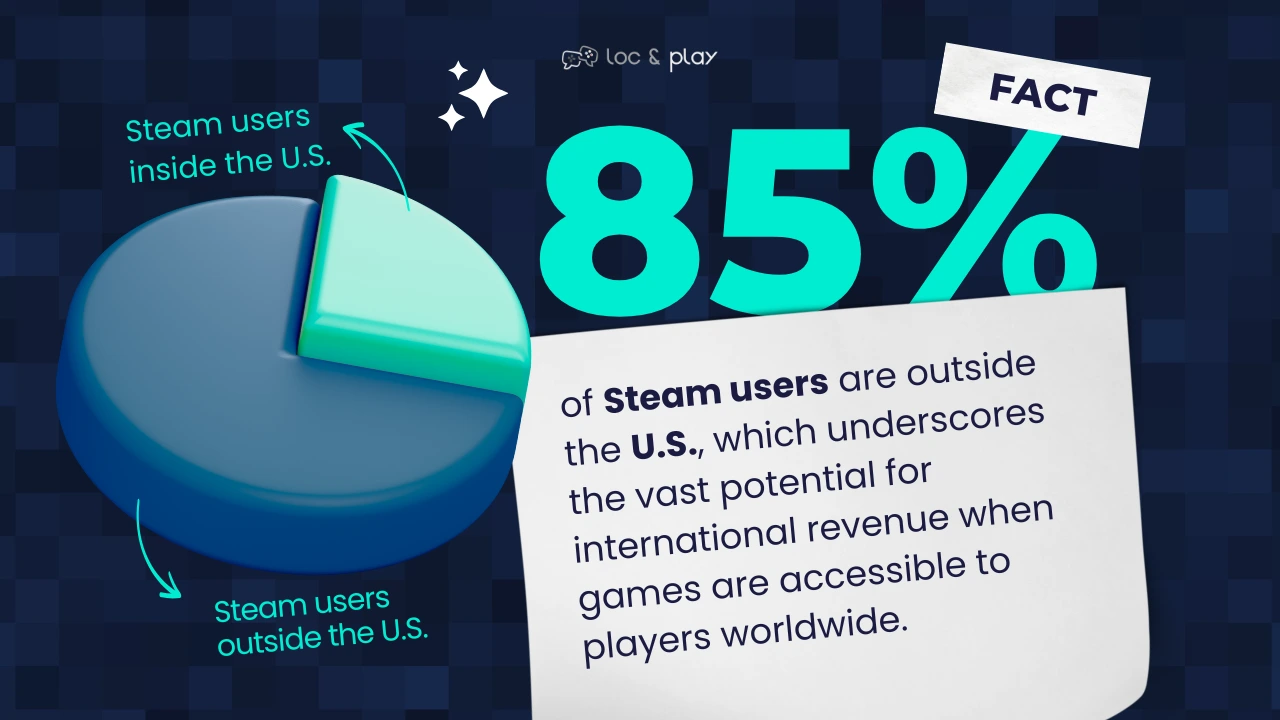
For example, Steam receives 85% of its traffic from users outside the United States, underscoring the vast potential for international revenue when games are accessible to players worldwide. The rapid growth in emerging markets, especially in Asia-Pacific, further drives demand for professional localization services, as publishers seek to engage the growing population of mobile and online gamers outside established markets.
3.2. Enhancing Player Engagement and Satisfaction
By adapting games linguistically and culturally for local audiences, LSPs allow players to enjoy a seamless, immersive experience that resonates with their expectations and cultural norms. High-quality localization ensures that humor, idioms, and references are meaningful and relatable to players in each target market, rather than feeling out of place or confusing.
This level of care builds player loyalty and increases the likelihood of positive reviews and recommendations. In turn, culturally adapted gaming experiences drive greater player retention and longer in-game session times, both of which are directly linked to higher revenue through repeat purchases and engagement with monetized content.
3.3. Increasing Sales and Conversion Rates
Localized games see significant boosts in sales, as players are much more likely to purchase products presented in their native language and tailored to their cultural context.
With almost 3 billion global consumers in the gaming sector, providing linguistically accessible content is a proven way to drive higher conversion rates from both digital and physical game sales. Localized marketing materials, app store descriptions, and customer support further improve conversion by removing language barriers throughout the customer journey, from discovery to post-purchase support.
3.4. Supporting Esports, Streaming, and Content Creation
The surge in esports and live streaming has amplified the need for multilingual content, as events and broadcasts attract global audiences. LSPs localize live commentary, event materials, and in-game content, enabling fans worldwide to engage with games in real time, regardless of their native language.
This not only increases viewership and advertising revenue, but also expands the pool of content creators and community contributors, further enhancing a game’s cultural reach and market value. As esports expands into new territories, the demand for professional translation and localization services continues to rise.
3.5. Addressing Market-Specific Needs and Regulations
LSPs assist developers in tailoring games to comply with local regulations and cultural sensitivities, preventing issues such as content bans or negative publicity that could delay or block market entry. This can include modifying graphics, text, and even gameplay elements to suit the expectations and legal requirements of different countries.
When LSPs proactively address these challenges, they ensure smooth launches and ongoing revenue flow by reducing the risk of costly interruptions or rework after a game’s release. This expertise is especially vital for genres or contents that may be controversial or heavily regulated in certain regions.
A Final Word
Although there are many advantages to game translation, there are drawbacks as well that creators must overcome to make sure it works. If LSPs offer complete translation solutions that are suited to customer requirements, they will assist developers in overcoming these obstacles. Competent linguists and cultural specialists make sure that the game remains consistent and of high quality throughout all language variants.